Plenary Speakers
Plenary Speakers
We are honored to introduce the distinguished plenary speakers for the 13th Vacuum and Surface Sciences Conference of Asia and Australia (VASSCAA-13). These visionary leaders will share their groundbreaking research and insights into the future of Vacuum and Surface Sciences. (Note: We are excited to announce that a total of four world-renowned plenary speakers will be joining us. The speaker list and their presentation details are currently being updated as they are confirmed. Please check back regularly for the latest announcements.)
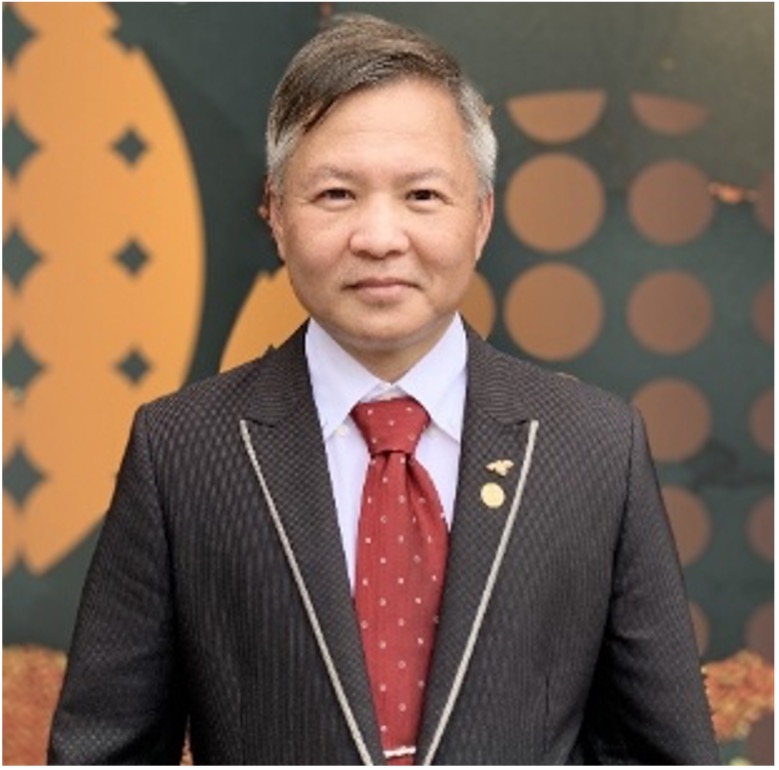
Ying-Hao Eddie Chu
(National Tsing Hua University, Taiwan)
Presentation Title
Unveiling the Intrinsic Properties of High-Entropy Functional Oxides through Heteroepitaxy
Biography
Professor Chu earned his Ph. D. in Materials Science & Engineering from National
Tsing Hua University in 2004. He then joined the University of California, Berkeley,
as a postdoctoral researcher. In 2008, he was appointed an assistant professor in the
Department of Materials Science & Engineering at National Chiao Tung University.
He was promoted to associate professor in 2015 and to full professor in 2018. In
2019, he was honored with the title of distinguished professor. Since 2013, he has
held an adjunct position at the Academia Sinica. In 2014, he began an adjunct
appointment in the Department of Electrophysics at National Chiao Tung University.
From 2016 to 2018, he served as an adjunct at the Material and Chemical Research
Laboratories of the Industrial Technology Research Institute and at the International
College of Semiconductor Technology at National Chiao Tung University. In 2019, he
became an associate editor for ACS Applied Electronic Materials, and in 2025, he
was promoted to executive editor. In 2022, he returned to National Tsing Hua
University. From July 2022 to January 2025, he served as the director of the Center
for Nanotechnology, Materials Science, and Microsystems. From May 2024 to
January 2025, he also served as Associate Vice President of R&D at National Tsing
Hua University. He was promoted to chair professor in the summer of 2024. As of
2022, he holds joint appointments with the College of Semiconductor Research and
the Department of Materials Science & Engineering at National Tsing Hua University,
the Department of Electrophysics at National Yang Ming Chiao Tung University, and
the Institute of Physics at Academia Sinica. Starting in 2025, he held an adjunct
position at the Center for Nanotechnology, Materials Science, and Microsystems at
National Tsing Hua University. His research primarily focuses on functional oxides
and strongly correlated electron systems. He has extensive experience using advanced
characterization techniques to understand and manipulate functional oxide
heterostructures, nanostructures, and interfaces. His goal is to develop pathways for
utilizing high-quality oxide heteroepitaxy in soft, transparent technology. Currently,
he is a pioneer in this research area, with the most publications. He has authored over
400 papers (Google Scholar: over 38000 citations, h-index = 94, Scopus: over 31000
citations, h-index=85) in academic journals, including more than 35 papers in the
Science or Nature series.
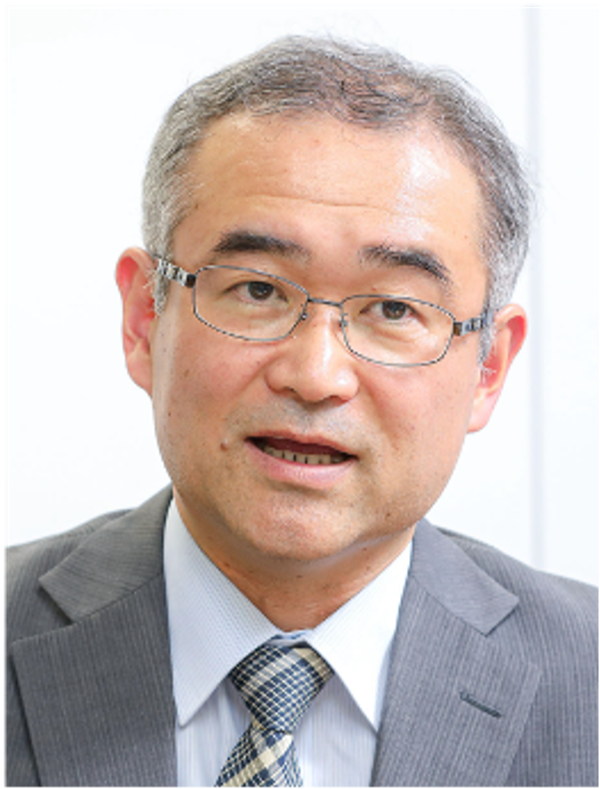
Yoshitada Morikawa
(The University of Osaka, Japan)
Presentation Title
Multi-scale simulations of chemical reactions at surfaces and interfaces using DFT and Machine-learning Methods.
Summary
Chemical reactions at solid surfaces are important in wide range of fields, including heterogeneous catalysis, electrochemistry, semiconductors, adhesion, and so on. Understanding these elementary reaction processes at the atomic level is crucial for elucidating the factors governing surface reactivity and for designing materials and reaction processes with more desirable properties. Surface science research has actively explored the adsorption and reaction processes of atoms and molecules on well-defined surfaces at the atomic level, with the goal of elucidating the elementary processes of surface reactions. However, even for the same metal surface, the reactivity can differ significantly between a catalyst under realistic reaction conditions and a clean solid surface under ultrahigh vacuum, a problem known as the "pressure gap" and/or "materials gap." The structure and chemical state of the interface during reactions constantly change dynamically due to the influence of finite temperature and ambient gases, making direct observation of these changes crucial.
In this presentation, I will discuss the recent results of our research group, which used a DFT-based machine learning interatomic potential (MLIP) to simulate chemical reactions on solid surfaces under conditions as close to real reaction conditions as possible.
In this presentation, I will discuss the recent results of our research group, which used a DFT-based machine learning interatomic potential (MLIP) to simulate chemical reactions on solid surfaces under conditions as close to real reaction conditions as possible.
Biography
| 1966 | Born in Osaka, Japan |
| 1989 | B.Sc. in Physics and Chemistry, Faculty of Science, Kyoto University |
| ··· | ··· |
Organized by
Supported by